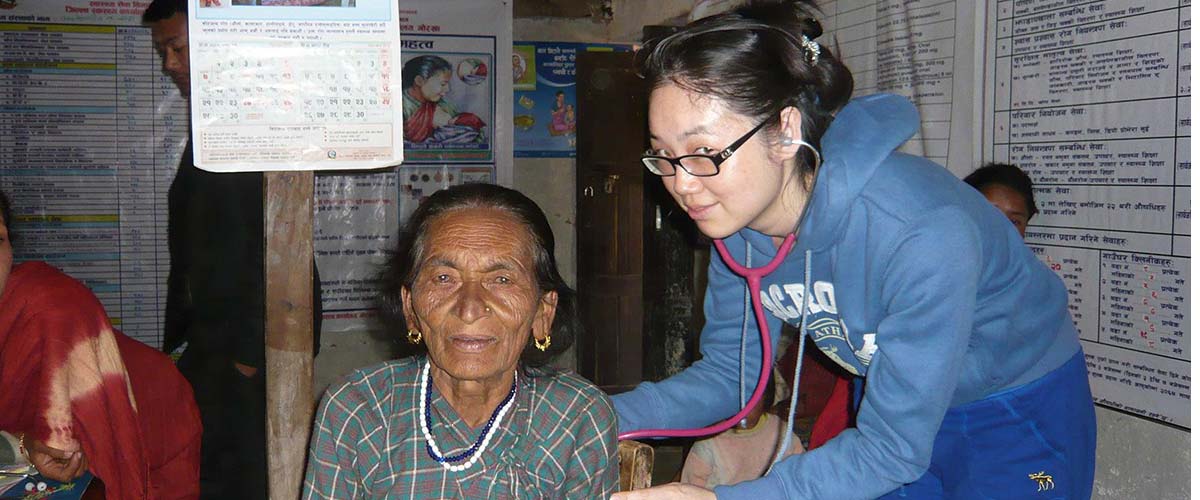
The overall pattern of morbidity in Nepal is dominated by infectious disease, nutritional disorders, and maternal and prenatal diseases, behaviour and social change communication is one of the most effective ways of improving health and social outcomes for women, children and their families.
Poverty is the main reason why babies are not vaccinated, why clean water and adequate sanitation are not available to many village people, why curative drugs and treatments are not accessible, and why mothers die every year unnecessarily during childbirth. A family’s nutritional security depends not only on wholesome food, but also on food storage, preparation and feeding, micronutrients, basic health services, safe water and sanitation, and good hygiene. For infants and young children, nutritional security also means immediate skin-to-skin proceeding to breastfeeding at birth, exclusive breastfeeding from birth to six months, and continued breastfeeding for two years or longer with age-appropriate complementary feeding to sustain growth and development.
In most cases, when living in such remote areas, the distance and lack of transportation to major cities to access the required medical treatment is difficult. Throughout the monsoon season many villagers struggle and many even die as there are very limited resources and access to proper treatments is simply not available. It can become near impossible to seek help as the roads become un-useable due to floods. This forces them to walk for 13 hours to reach a main road followed by an 8 hour bus ride to be able to access the city.
The only resource available to this population is traditional medicine methods which include Shamanism and local healers. In 2009, during the months of June through August, the region has already had more than 300 deaths attributed to diarrhea and cholera epidemics. In 2008, 25 people died of rabies in Manbu Village alone. The region is further affected by natural disasters such as landslides, fires and flashfloods, which claim lives every year. The lack of prenatal and obstetrical care is a major concern for pregnant women and their unborn babies. The lack of health education further compounds an already critical health situation leading to an unnecessary loss of human lives. Basic human needs are lacking in this region and consequently impact the possibility of positive community outcomes. It will be impossible for this region to grow and prosper until basic needs are met.
Given the evident abysmal medical services available in the region, Sambhav Nepal proposes establishing a community health post in the Manbu village with all major services commonly demanded. Its central location among other adjoining villages makes Manbu the ideal site for this project.
The Project
In order to address the serious health issues of the villages, coupled with the intertwined prevalence of poverty, in collaboration with experts in this field, Sambhav Nepal has devised the Manbu Health Outpost project.
The health outpost will require land which may be acquired through purchase, donation or perhaps a combination of both. The cost of the land will be valued as per current value of land in the village. As soon as land is identified and acquired, the project can begin in earnest. Since this is a health outpost, it requires fully furnished medical consulting rooms, equipped with lights, wash basins, desks, examination tables, medical equipment, medical supplies and medical reference books. Building materials for the proposed project will be locally sought where possible; but those unavailable in Manbu (rebar, cement, corrugated roof, screws and bolts, etc.) will be transported from Kathmandu. Stones and lumber are readily available and are more cost effective when purchased through the local villages. Engaging the local villagers in the building project will also provide vital employment opportunities as well as foster a sense of community engagement that will be very important for the future of the clinic.
Building Construction Plan
The reason a compound is the design of choice for this project, includes security, housing facilities for national/international medical teams, and a functional clinic design that provides maximum utilization of space for patients and medical professionals. The proposed project design has been designed by two American architects who have volunteered their time and expertise to help Sambhav Nepal achieve its goal of building a Health Post in Manbu Village. The Health Outpost will comprise of the following rooms:
- Examination Room-3
- Surgery/ Dental Exam-1
- Storage/ Lab-1
- Reception/ Waiting Room-1
- Doctors Living Quarters
- Mens Bedroom-1
- Womens Bedroom-1
- Common Area/Kitchen-1
- Caretakers’ Quarters/Security-1
- Mechanical Room/Water Tank
- Hall
- Toilets-3
- Gate/Entry
- Covered Walkway
- Medicinal Garden
Health Outpost Sustainability
The challenges of building the clinic are matched by the need for service provision. The government has pledged support to provide certified medical professionals, including doctors and health assistants. Sambhav Nepal will facilitate qualified volunteers to upgrade and enhance the services provided by the health facility. We realize that initially the services may be provided on an intermittent basis, therefore, to maximize health outcomes, the crucial first step for this facility will be to provide education that focuses on preventative care, environmental health issues and public health services such as immunizations and de-worming programs. Sambhav Nepal hopes to be the catalyst for change in the region and once the clinic project establishes a stable service provision, it is our wish to allow the community to assume responsibility for the project. We are optimistic that with help from the international community, grants, volunteerism and donations, this clinic will serve to improve the lives of many Nepalese in remote regions and reduce the mortality rate associated with presently easily treatable diseases.
Project Supervision, Evaluation and Timeline
The Social Welfare Council (Kathmandu) and the District Health Office (Gorkha) will supervise, observe or evaluate on the activities of the project. Co-ordination with District Coordination Committee, District Health Office, Rural Municipality Office and other concerned agencies will participate in project operations once it is finished. Sambhav Nepal will prepare and submit progress-reports to the Social Welfare Council and other interested agencies bi-annually or as requested. The progress report and auditing report of the program will be submitted to District Coordination Committee, District Administration Office and Social Welfare Council annually.
Sambhav Nepal estimates that this will be a three year project. The community health outpost is a vital project that will provide much needed health care to many of the poor and underserved in the region.
Funding
We have calculated the cost of creating the proposed healpost from scratch is roughly at USD 130,000. This will cover the cost of acquisition of land, construction of building, and installation of necessary amenities. We are seeking the most cost-effective means of the best possible materials to materialize our plan of creating a high-grade facility. We have also consulted with engineers, laborers and vendors to prepare a detailed and accurate estimate of costs required for the functioning of the Manbu Healthpost project.
 Swiss Version